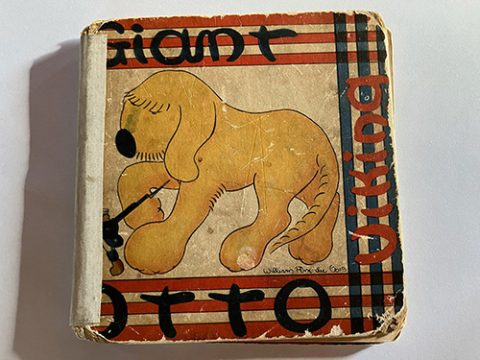
 I cannot remember a time in my life when there were no books close at hand. I have a vague but real memory of being gifted with a book by my father when I was somewhere about the age of four or five. That book, Giant Otto, by William Pene Du Bois, sits on my shelf to this day. On some of the pages are my pencil tracings of the illustrations.
Family lore has it that I was an early reader. “I can read! I can read!” It’s said I proclaimed at a time when I probably couldn’t.
No surprise, I grew up in a house with books. As kids, we were encouraged to have our own library. Indeed, every Christmas, every birthday, I received at least one book.
I must have been known as a book lover because I also still have a birthday gift — my tenth birthday — from four classmates. Tales of the Arabian Nights.
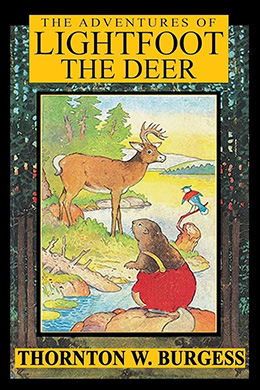 At some point, I discovered the chapter-book animal stories of Thornton W. Burgess — Blackie the Crow, Lightfoot the Deer — when they were serialized in the pages of the New York Herald Tribune. Then I discovered the actual books — there were many of them — at the local used bookstore, which I could and did often visit.
I have no idea what they cost, but they could not have been much because I was able to use my allowance money to buy many of them. I had a bookcase in which I lined them up.
[I can also recall feeling a pang of regret when, in college, I learned that my mother gave my whole collection of those Burgess books to one of my cousins.]
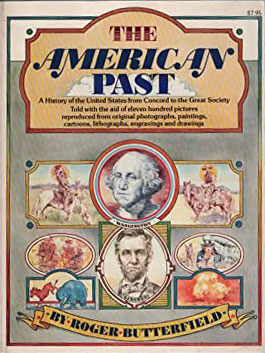 One of the most influential books in my life was The American Past by Roger Butterfield “told with the aid of a thousand pictures.”
I don’t know when my parents brought it into our home, but I perused that book countless times, and again, my original 1947 edition of the book is still with me.
I’m willing to believe that it was that book that gave me my fascination with history, in particular American history. It clearly didn’t hurt that my home stood where part of the Battle of Long Island — the biggest battle in the war — was fought.
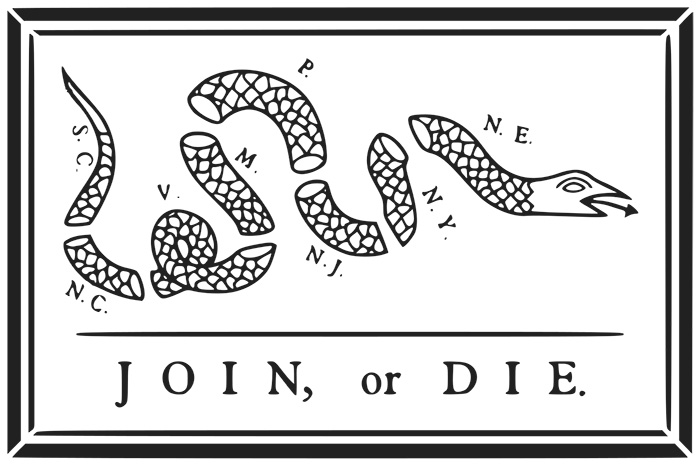
And even now, as I write this note, I’ve just committed to write another work of historical fiction. How relevant is all that history? The American Past replicates the first known political cartoon in US history. Drawn by Benjamin Franklin, it shows a snake cut up in sections, each section being a different colony. The caption: “Join or die.” Relevant today.
4 thoughts on “Books Close at Hand”
Growing up I had an interesting relationship with books. Not a ‘love-hate’ one though. Reading was something you had to do for school. Rarely for pleasure.
I did love owning books. When those book order forms came in, I had to buy some. They were usually joke books or funny stories. I did read Beverly Cleary, Pippi Longstockings and the All-of-a-Kind Family stories but I often wondered why I spent time reading books when they weren’t a class assignment. It was the same for writing. In elementary school I had an idea for an Easter mystery. Why this Jewish girl thought about an Easter mystery was also a mystery, but I had started writing and thought, “Wait. This isn’t a school assignment.” And put it away.
My parents weren’t the kind to encourage reading even though my father was an elementary school principal and my mother was an assistant-principal. They didn’t take me to the library. My father would occasionally bring me books they were discarding from his school, but neither read for pleasure and I don’t recall anyone reading to me, not even my siblings. My mother would say, “We read enough for work.”
I think it was my last year of college, while I should have been studying for my finals, my mother walked into my bedroom with a book held between two fingers as if it was something offensive. My parents had just gotten back from visiting friends in Florida. She said, “Someone gave me this to read on the trip. It was actually good. You might like it.” And she tossed it to me and ran out of the room. I was tired of studying and thought I would read a page or two. About 150 pages later I realized I was actually reading a book and enjoying it. Too bad I had to go back to studying. The book was “The Thornbirds.” I began reading for pleasure from then on … and acquiring books — The Clan of the Cave Bear series I think were my first adult purchases.
What changed and why was I now enjoying books? It wasn’t until I was getting my advanced literacy degree did it hit me why. In one of my reading classes they talked about inferring. Inferring? INFERRING! That was it. I had always been a literal reader. I read words but never thought about them. That’s why when I was asked why a character felt a certain way, I would answer I don’t know. The book didn’t say. I had done well in school, but could have done better if I knew ‘how’ to read. It was probably assumed inferencing naturally occurred in reading and the reader didn’t have to be made aware of it in order to understand. Books made me laugh. Maybe that was how deep my inferencing went, but teachers never pointed it out. I made sure as a teacher, my students understood this. I realized both my children had the same issue when it was suggested they go for extra help to boost their comprehension.
Now I have shelves of books. Piles of books on shelf tops. So much that visitors ask, “Do you have enough books?” I answer, “No. Never enough.” There is a feeling of security with each book holding a special story knowledge. Each have an inside secret.
Alas, even though my children loved when I read to them, they, like my husband, do not read for pleasure. Hopefully, one day, they’ll open a book to read a few pages and will find themselves so entranced and thrilled by the book journey they went on that they’ll want to take another trip somewhere else.
Books make a house feel like a home.
Singing to the choir here! Best of luck with your new project, Best, Edie
A great story that mirrors many children’s authors” beginnings. At least we hope they were surrounded by books from an early age.
Once a librarian, always a librarian, often known to recommend and read what we remember and loved.
Beautifully said. As we are nearing retirement age and thinking of downsizing I realize that I am going to have to release some of my collection. It has started in slow increments– and it is hard. There are boxes of books standing in the front porch area (enclosed) waiting for their next journey but it is like saying good-bye to dear friends. Those that are staying on my shef include LM Montgomery’s Anne of Avonlea books– James Herriots works– And even as some leave more seem to find themselves arriving by mail from Amazon. So the collection seems to be renewing itself as tastes and vision changes. Wherever we land all I know is that there will be boxes and boxes of books to move. (in my defense there are less coming in and more of them are going out…:)