Avi’s Summer Blog Series 2026
Debra J. Stone
From Avi: Just as we’ve done for the last four summers, 2025 through 2022, I’ve invited 13 admired authors to write for my blog throughout the summer. I hope you’ll tune in each Tuesday to see who answered this year’s question, which we hope provides you and the young people in your life with inspiration. Whether you already read these authors’, poets’, and illustrators’ books or we’re introducing them to you, we trust you’ll find new books to read!
What advice can you give so I can become a writer?

Growing up, I knew nothing about writers, especially Black writers. It wasn’t until I went to college that I learned about early Black historical fiction writers like Alexandre Dumas, the twentieth-century Harlem Renaissance writers, and contemporary writers like Toni Morrison. I heard about Gwendolyn Brooks from a friend who spent her summers in Chicago with her grandparents.
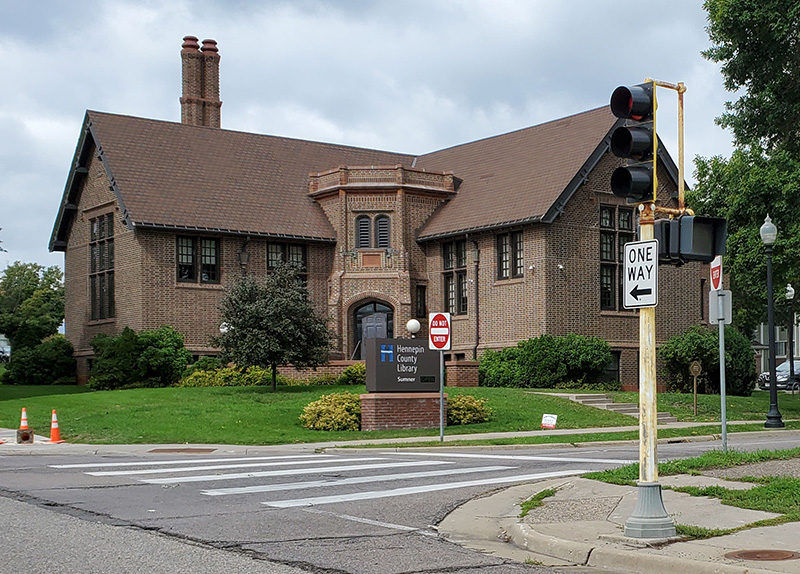
I spent my summer when it was too hot outside, and none of my friends wanted to stay indoors; we walked to our neighborhood library. Sumner Library in North Minneapolis was one of the early 1900 Carnegie libraries meant to provide access to free books. My friends and I would spend the afternoon underneath huge ceiling fans and windows that opened, letting in the cool breezes from the tall elm and oak trees in the building’s front. It was in high school that I learned I liked to write, and I was good too. My reading and writing assignments morphed into writing in a diary I received on Christmas.
I am still passionate about reading, and it’s an important practice in becoming an excellent writer. And as I developed as a writer, I found myself listening to elders telling their stories. (You know how to pretend you’re not listening if the elders don’t want you in their business, lol!). Thinking of elders as a library full of information, I could further investigate history books or the internet. There were more stories about Black cowboys and pioneers of the western United States Territories from listening to the stories of my grandfather, who lived on a ranch in the Sandhills of the Nebraska territories. I wrote about this in my middle-grade novel, The House on Rondo. From there, I learned about the Black migration to Saint Paul, Minnesota, and what happened to the Black neighborhood of Rondo Avenue. These stories were valuable to me as I created the story of Zenobia, the people of Rondo, and discovered why all the houses and businesses were destroyed by the Minnesota Department of Transportation as a part of the federal policy of building the United States interstate transportation system.
I have come a long way from not having knowledge of Black writers and literature to becoming a writer like so many of the writers I admired and read. Being a writer can be fun, frustrating, and rewarding. It was a ten-year project writing, The House on Rondo. But when I turned in the manuscript to the editor, I knew I had created a book that would bring forth the buried history of Rondo and other lost neighborhoods.
So, I hope you become a writer. But remember, find a day job that you like as much as you like reading and writing. Bookstores always need booksellers. Libraries always need librarians.
Particulars
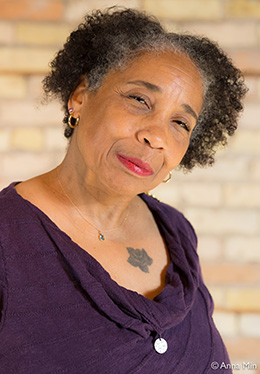
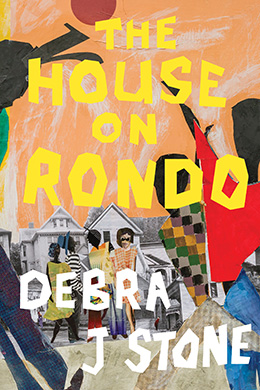
Debra J Stone is a Jerome Hill Arts Fellow in Literature 2023–25, a recipient of several Minnesota State Arts Board grants, and The Loft Mirrors and Windows Fellow 2023 for writing books for BIPOC children and young adults. Her debut novel, The House on Rondo, was a finalist for the Minnesota Book Award in the Middle Grade Fiction category and a finalist in the Children’s category for the Midwest Independent Publishers Association Midwest Book Awards. Debra resides in Minneapolis with her husband and dog Ruby, a rambunctious Red Heeler Australian Cattle Dog.