Avi’s Summer Blog Series 2026
Linda Williams Jackson
From Avi: Just as we’ve done for the last four summers, 2025 through 2022, I’ve invited 13 admired authors to write for my blog throughout the summer. I hope you’ll tune in each Tuesday to see who answered this year’s question, which we hope provides you and the young people in your life with inspiration. Whether you already read these authors’, poets’, and illustrators’ books or we’re introducing them to you, we trust you’ll find new books to read!
What advice can you give so I can become a writer?

Sit down. Write. Finish what you start. Finish strong.
I know a college student who suddenly went from having an A in his English Composition class to a D simply because he refused to write his final essay.
“It’s one essay. 800 words,” I said to him. “Just sit down and draft something. You can fix it and make it good once you get it all down.”
He shook his head. “I can’t. I don’t have it in me. I don’t want to write another essay.”
“You’ll fail the class if you don’t write the essay. You have an A in the class. How can you just throw that away?”
His professor even sent him an email after the essay’s due date, checking to see whether he had perhaps had trouble uploading the essay to the system. The professor asked him to bring a paper copy to class if so.
Even given a second chance, College Student still refused to write that final essay. Interestingly, while I was trying to convince College Student to not squander an opportunity to maintain a good grade point average, I was being convicted regarding my own writing. See, I too had been squandering an opportunity — not regarding a grade point average — but regarding my writing career. I had been refusing to work on a manuscript that, not one, but two, agents had been imploring me to draft.
I began drafting the manuscript in the spring of 2023. By July I had a complete synopsis of the story (a work of historical fiction set in 1930’s Mississippi) and the first 40 or so pages. I sent this package to my agent and asked whether it was enough to submit a proposal to an editor. My agent LOVED the premise and said that the opening pages were strong. However, she made suggestions for a few changes. She also stated that 70 pages would make a stronger proposal than the submitted 40 pages.
With her encouragement, I was excited and ready to work on enhancing my proposal.
Then, doubt set in.
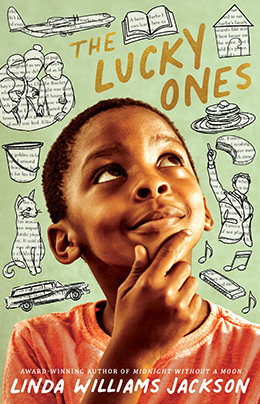
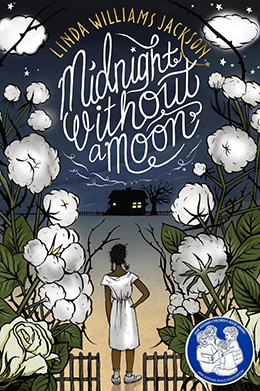
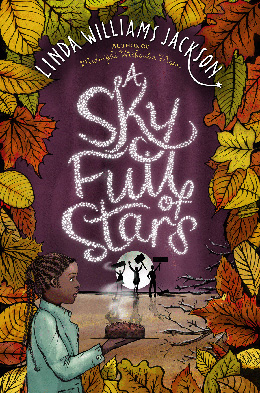
My most recent work of historical fiction (The Lucky Ones), at that time, was getting plenty of attention from librarians, teachers, award committees, and conference organizers. The book even received multiple mentions from two-time Newbery Medal winner Kate DiCamillo. Nevertheless, sales for that book remained stagnant. Sales for my other two works of historical fiction, Midnight Without a Moon and A Sky Full of Stars, were also moving slower than a turtle trekking uphill. I gave in to apathy and began thinking, “What’s the point? Nobody’s reading my books anyway. Why keep writing historical fiction when nobody wants to read it?”
I told myself that I was DONE writing historical fiction. So, I pulled out an old manuscript of contemporary fiction and began revising it.
When I sent the manuscript to my agent, she kindly suggested that I focus on the historical fiction manuscript instead. During the six years that she had been my agent, I don’t recall ever disagreeing with her. But this time, I did. I told my agent that I just couldn’t write historical fiction anymore. I couldn’t write what no one was interested in reading. I couldn’t write what wouldn’t sell.
My agent graciously gave me the opportunity to venture out and see whether another agent was interested in my contemporary manuscript while leaving her door open if I couldn’t find another agent. We parted ways on good terms, and I did find another agent who thought she could sell the contemporary manuscript.
But … the manuscript didn’t sell. (Or hasn’t sold yet.)
By this time, I had finally gotten up the nerve to go back to the historical novel and add some pages. I sent those pages to my new agent. She also loved the premise, the synopsis, and the now 70-page sample. She, however, stated that in order to try to sell on proposal, she would like to see the manuscript reach a certain turning point in the story as opposed to a certain page count.
So, of course, I jumped in and got to writing.
Not!!!
Again, I became discouraged and went back to a different contemporary manuscript, a short middle grade series, and a few picture books. Sadly, I was willing to work on anything other than that historical fiction. Like the College Student Who Refused to Write that Final Essay, I just couldn’t wouldn’t bring myself to do it.
Until I did.
I was actually inspired by the incident with the College Student. It was an eye-opening moment which revealed to me that I was simply refusing to show up and do the work. I was squandering my opportunity.
At this point, I’d had two agents saying, “Hey, work on the historical novel.” And I wouldn’t. I even won a grant in 2025 to encourage me to complete a work of middle-grade fiction, yet I continued to let fear hold me back.
Then, I made up my mind to finish what I started. I told myself that it didn’t matter whether anyone wanted to buy this manuscript or not, I owed it to myself to finish it. I owed it to myself to know how this story ends. So, I went all in and I am now beyond the point in the manuscript where my current agent suggested. But I am not sending the draft to her because I no longer care to sell the manuscript on proposal. I care about completing it. That’s my job as a writer — to finish what I started. And, I must finish strong. Yes, I want to write what sells, but I also need to write what’s in my heart.
So, if you want to be a writer:
Sit down. Write. Finish what you start. Finish strong.
Don’t worry about whether the work will sell. That part is completely out of your control. Write what you know you need to write. And write it to the best of your ability.
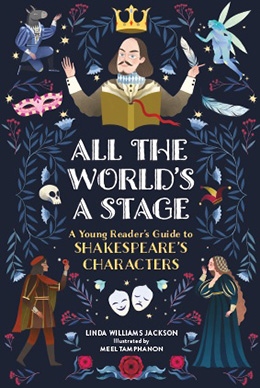
Side note: I did manage to write a nonfiction middle-grade book during my pause procrastination on historical fiction. All the World’s a Stage: A Young Reader’s Guide to Shakespeare’s Characters (Illustrated by Meel Tamphanon) will be published by Running Press Kids on March 16, 2027.
Particulars
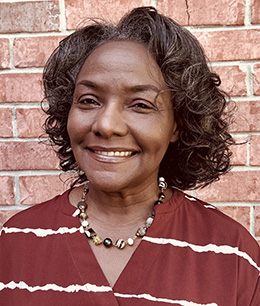
Linda Williams Jackson is the author of award-winning novels centered around significant historical events in the Mississippi Delta, where she was born and raised. Her first novel, Midnight Without a Moon, centered around the Emmett Till murder, was recognized as an American Library Association Notable Book and a Jane Addams Honor Book for Peace and Social Justice. Her most recent novel, The Lucky Ones, was inspired by Robert Kennedy’s 1967 Poverty Tour of the Mississippi Delta and is loosely based on the author’s own family’s experiences. The Lucky Ones was a New-York Historical Society’s Children’s History Book Prize finalist and was recognized by Good Housekeeping magazine as one of the best 50 kids’ books of all time. Jackson’s first work of nonfiction for middle-grade readers debuts in the spring of 2027.