Avi

word craft

blog

Avi’s Summer Blog Series 2026

Mike Jung

From Avi: Just as we’ve done for the last four sum­mers, 2025 through 2022, I’ve invit­ed 13 admired authors to write for my blog through­out the sum­mer. I hope you’ll tune in each Tues­day to see who answered this year’s ques­tion, which we hope pro­vides you and the young peo­ple in your life with inspi­ra­tion. Whether you already read these authors’, poets’, and illus­tra­tors’ books or we’re intro­duc­ing them to you, we trust you’ll find new books to read!

What advice can you give so I can become a writer? a poet?
Asian American boy lying on the floor and writing
It’s Interesting … and Complicated 

Writ­ing advice is an inter­est­ing­ly com­pli­cat­ed thing for me, because it’s…uh, inter­est­ing and com­pli­cat­ed, haha. *sigh* The act of writ­ing has a whole lot of lay­ers, you know? It’s a cre­ative art, and cre­at­ing art can be real­ly fun and absorb­ing. Cre­at­ing art is also work, though, and work­ing on a project can be tir­ing and frus­trat­ing. How­ev­er, the most com­pli­cat­ed and most inter­est­ing thing about writ­ing is how deeply per­son­al it can be, and how much of our own thoughts, feel­ings, and expe­ri­ences we invest in the work.

Per­haps you’re think­ing “no way dude, I just read a book about a fart­ing fer­ret who’s best friends with a talk­ing pota­to mash­er and it did NOT show me the mean­ing of life,” and okay, sure, not all books have the same type or depth of per­son­al mean­ing, but I kid you not when I say the embar­rass­ment that fer­ret felt when it fart­ed in front of its pota­to-mash­ing bestie is a true reflec­tion of life right here on this plan­et Earth.

Advice about writ­ing is com­pli­cat­ed because in the strange and gar­bled depths of my own mind, it’s not all that sep­a­rate from advice about life, and life is com­pli­cat­ed. It’s a worm­hole of com­pli­ca­tion, a com­pli­cat­ed snake eat­ing its com­pli­cat­ed self from its com­pli­cat­ed tail to its com­pli­cat­ed head! Ugh, that’s ter­ri­ble — sor­ry — but it kind of proves my point, am I right?

My life has been com­pli­cat­ed in recent years, but that’s noth­ing new; my life was also com­pli­cat­ed when I was an itty-bit­ty whip­per­snap­per of a human. Being a kid was hard in many ways; being a teenag­er was even hard­er. I was deeply, ter­ri­bly lone­ly, I always felt total­ly dif­fer­ent from every­one else in a bad way, and I was con­vinced I was hat­ed by the world and every­one in it. And now that I’m writ­ing this essay, I real­ize I’m writ­ing for a spe­cif­ic audience.

I hope that every bud­ding young writer who reads this can find some­thing mean­ing­ful in it, but the kids I’m think­ing about the most are the ones who are strug­gling like I did. The young peo­ple whose lives are com­pli­cat­ed because of exclu­sion and iso­la­tion. If that’s you, I’m so sor­ry. I know how hard that strug­gle is, and I can hon­est­ly say from per­son­al expe­ri­ence that it can get bet­ter — a lot bet­ter, even — but it’s not easy to believe it in the moment.

So now you might be think­ing “OMG, Mike, first you talk about gassy pole­cats and sen­tient kitchen tools but then you start talk­ing about crush­ing lone­li­ness and it’s super depress­ing, what is your DEAL,” and okay, yes, that’s a valid reac­tion, but bear with me, I’m actu­al­ly get­ting to the point, seriously.

When I was in that time of my life — alone, ter­ri­fied, with no idea how to make things bet­ter — I found com­fort in escapism. Yes, escap­ing real­i­ty can be tak­en too far, but it was absolute­ly essen­tial for me, and one of my impor­tant ways to escape was by read­ing com­ic books. My old­er broth­er col­lect­ed them, and I was reeeeaaal­ly not sup­posed to open up the very long card­board box­es he kept in the base­ment clos­et, take the comics out of their plas­tic sleeves and read the val­ue out of them, but of course I did, because being a lone­ly out­cast didn’t stop me from being a dis­re­spect­ful younger broth­er too.

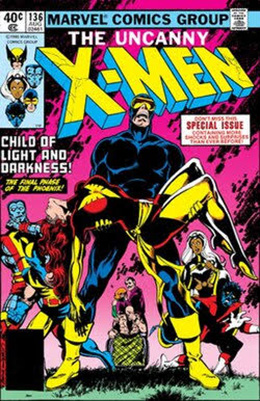
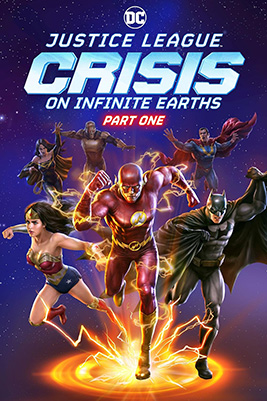
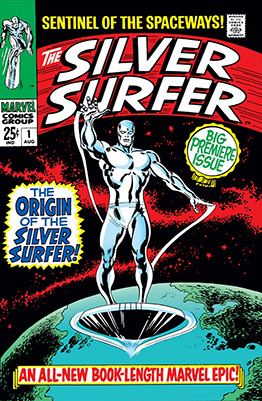
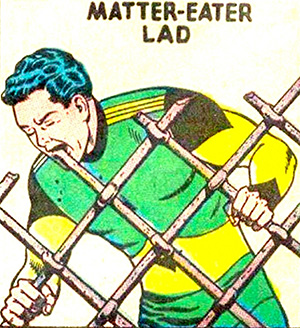
All of my brother’s com­ic books were pub­lished by either DC or Mar­vel, long before either of them had cin­e­mat­ic uni­vers­es. I read them all, and I def­i­nite­ly had favorites — The Uncan­ny X‑Men with its Dark Phoenix Saga, the epic Cri­sis on Infi­nite Earths series, the leg­endary 18-issue first run of The Sil­ver Surfer — but one of my pre­ferred series was the rel­a­tive­ly over­looked Legion of Super-Heroes. This group of supes includ­ed char­ac­ters like Braini­ac 5, Trip­li­cate Girl, Bounc­ing Boy, and the young bro I’m here to dis­cuss, the one and only Mat­ter-Eater Lad.

Uncanny X-Men Dark Phoenix Saga
Justice League Crisis on Infinite Earths Part One
The Origin of the Silver Surfer

Matter-Eater Lad eating a metal fence“Lad” is def­i­nite­ly a 1950s kind of word to use in the name of a pow­er­ful alien, ado­les­cent or not, but the name as a whole is fab­u­lous­ly self-explana­to­ry. Mat­ter-Eater Lad. He’s, like, a kid who eats mat­ter, as in he can eat … well, what­ev­er he wants. Tree stumps. Bowl­ing balls. A hyper-advanced alien machine that can con­vert the user’s thoughts into real­i­ty. I mean, that is an incred­i­ble, god­like pow­er! But I’ll be hon­est, I also found it very, very sil­ly. Super goofy. Not quite as goofy as a chat­ty pota­to-mash­er with a best friend, but in the same goofy ballpark.

Goofy char­ac­ters like Mat­ter-Eater Lad and oth­er, equal­ly goofy sto­ries were gen­uine­ly impor­tant to me dur­ing those hard years. They were rays of light in a time of what felt like impen­e­tra­ble dark­ness, and they helped me get to the oth­er side of that darkness.

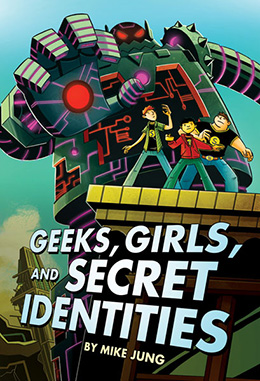
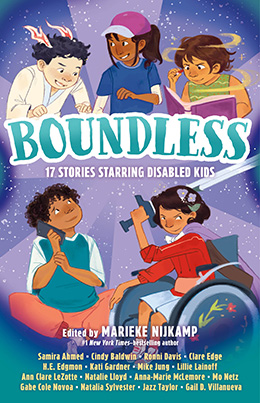
Geeks, Girls, and Secret Identities by Mike JungNow? I’m a pub­lished author who writes sto­ries for kids. I’ve writ­ten one book about my very own super­hero that I got to make up myself (Geeks, Girls, and Secret Iden­ti­ties), and I wrote a short sto­ry about a super­hero school for an anthol­o­gy that hits the shelves in Octo­ber 2026 (Bound­less: 17 Sto­ries Star­ring Dis­abled Kids). That story’s called “Here Be Drag­ons,” and it includes a char­ac­ter named Munch. His super­pow­er? Well. He eats things. All kinds of things. You could say he eats … matter.

I know I’ve been say­ing “ermagersh, writ­ing and life and every­thing about every­thing is com­pli­cat­ed,” but in the end, my advice for both writ­ing and liv­ing feels pret­ty sim­ple. The world is full of things that we like, and it’s also full of peo­ple who won’t hes­i­tate to tell you if the things you like aren’t impor­tant, espe­cial­ly if the things you like are goofy, sil­ly, weird, and so on. Don’t lis­ten to them. The only opin­ion about those things that mat­ters is yours. If something’s impor­tant to you, it is impor­tant, full stop.

Like the things you like. Think about them. Talk about them, if you’re lucky enough to have peo­ple to do that with. You could even try writ­ing about them, and if you keep think­ing, talk­ing, and writ­ing about the things you like, well. You might write a book about them some day. And how­ev­er far that process takes you, it’s a good process. It’s com­pli­cat­ed and a lot of work, but if you’re doing it, you’re a writer, and oh, that’s a good feeling.
Particulars

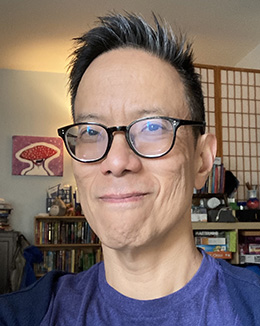
Mike Jung is the author of Geeks, Girls, and Secret Iden­ti­ties, The Boys in the Back Row, Theo Chang is Not a Cat, and Uniden­ti­fied Sub­ur­ban Object. He is a library pro­fes­sion­al by day, a writer (and ukelele play­er) by night, and a found­ing mem­ber of the #WeNeed­Di­verse­Books team. He lives in the San Fran­cis­co Bay area with his part­ner and their three cats.

Leave a Reply

This site uses Akismet to reduce spam. Learn how your comment data is processed.