Have you read a good book lately? A cookbook?
For many of us, this is the kind of book we read more often than not. Sometimes on a daily basis. But, in my experience, we rarely talk about them as books, how they are written, or if they are indeed readable. Who are the good writers of cookbooks? To be sure, it is the recipes that are important. Is it important if they are written about well?
As the one who does the cooking in my household and enjoys it, I read cookbooks. Sometimes my bedtime reading will be about what I will cook the next day, especially if it’s to be a gathering of friends. As I write this, I know that in a couple of days my adult son and his girlfriend are coming for dinner.
What shall I cook? What cookbook shall I turn to? Who likes what? Who won’t eat what? Go to an old known favorite? Be daring?
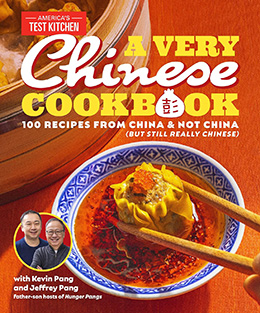
Over my years, cookbooks have radically changed. Recall the old Good Housekeeping cookbook, and you’ll remember that it simply provided recipes. No doubt, good ones. But pick up the recently published A Very Chinese Cookbook by Kevin and Jeffrey Pang, and besides the recipes, you’ll find pages of informal information about the culture of Chinese food, ingredients, and ways of eating, as well as personal stories about the writers, who are father and son.
Also, in cookbooks these days, there are photographs. Lots of them. Enticing! It’s become very common. You even see credits for “Food Stylists.”
(In that context, I once learned that plaster of Paris (hardened) is a good substitute for photographed whipped cream — but, please, only in photos.)
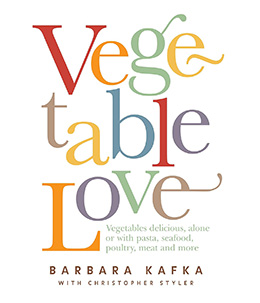
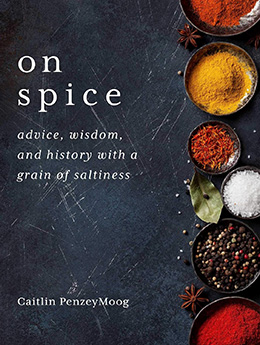
Turn to one of Ina Garten’s books (the “Barefoot Contessa”) and you’ll find all kinds of engaging chat about the social side of eating a meal. Consider Barbara Kafka’s Vegetable Love and you’ll discover more about individual vegetables than you ever thought it was possible to know. One of my favorite cookbooks is On Spice: Advice, Wisdom, and History with a Grain of Saltiness. By Gaitlin PenzeyMoog. Fascinating.
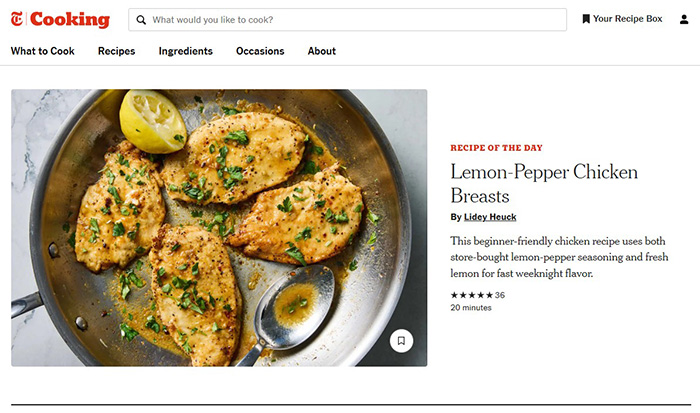
Even online recipes have good introductions by cooks. I’m partial to the New York Times cooking section, where you’ll find good writing by Sam Sifton and Melissa Clark — and I think — good recipes.
There is a real skill in food writing: deep explanations of the food, its origins, culture, and techniques, as well as the prep. To be sure, it is highly descriptive writing, but it often tries to suggest the experience of eating the food. If ever there were a book of promises, a cookbook must fit the bill.
To be clear, good writing does not ensure a good recipe. No more than a good recipe brings on good writing. But when you have both, the pleasure is amplified — when you read and when you eat.
Now, think about the last novel you read. Surely the (human) characters must have eaten. Yet, generally speaking, very little attention is paid to the food. I have been guilty of that in my writing. Eating is just assumed.
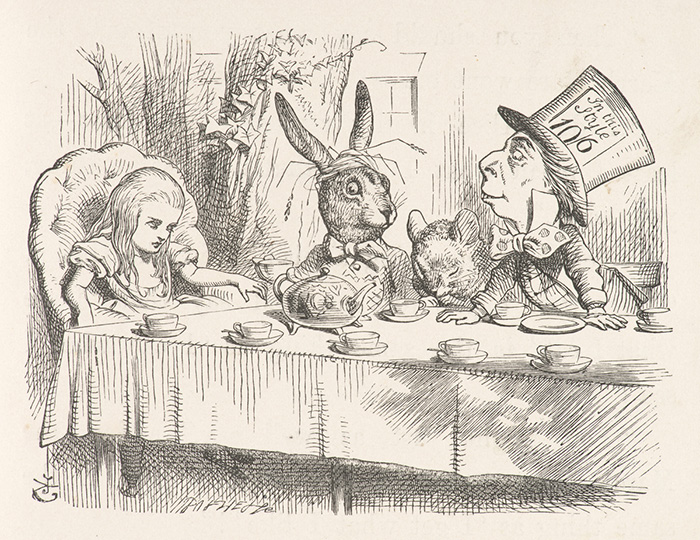
The Mad Hatter’s Tea Party from Alice in Wonderland by Lewis Carroll. Illustration by John Tenniel. (in the public domain)
In novels, now and again, there is a gathering around food. (Do consider the tea party in Alice in Wonderland!) Or a dinner is part of the plot. Rarely is there much focus on what is eaten. That said, in mysteries, eating poison is often what is dished up. Still, as we all know, what we eat, how we eat, and even when we eat, can tell us much about an individual’s character.
So, I invite my readers to share the title of a work of fiction in which food has a vital and descriptive part. Or the best-written cookbook you know.
We’ll eat your words.
3 thoughts on “Read a Good Cookbook Lately?”
I love Laurie Colwin’s cook books HOME COOKING and MORE HOME COOKING. And all of Marion Cunningham’s cookbooks.
Emily
The last book I finished was Sally, Army Dietitian (1944) by May Worthington Eells. My current interest is children’s and YA career fiction, books with titles like Cherry Ames, Student Nurse and Charles Hampton, Research Chemist. Sally works at an Army hospital in Southern California. Here is the menu for Christmas dinner:
Fruit cocktail, consomme with butter thins, celery, olives, burr gherkins, roast turkey, apple and raisin dressing, giblet gravy, whipped potatoes, candied sweet potatoes, escalloped corn, frosted peas, lettuce and tomato salad, cranberry sauce, ice cream with melba sauce, chocolate cake, mince pie, pumpkin pie, coffee, milk, nuts, raisins, and candy. And because it was the 40s, it ends with cigarettes!
Ruth Reichl’s books– Tender to the Bone and several others. I have a weakness for Cook’s Illustrated Magazines — imagine my luck at finding a pile for 50 cents each at a charity shop. I love reading older magazines and cookbooks… from the 1960s backwards (from the 1920s — 1940s are my favorites). Julia Child’s biography was also a great read as well as her any of her cookbooks. I, too, often read cookbooks at bedtime. I have explained to many people that each recipe is a very short story. List of characters (ingredients) and how and when each element is added. Is the size of the pan the plot? And how it is cooked– the location of the story? Good recipes, good cooking and good stories have a lot in common.….:)