
Avi’s Summer Blog Series 2026
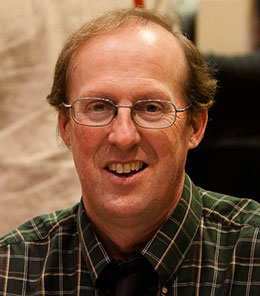
Gary D. Schmidt
From Avi: Just as we’ve done for the last four summers, 2025 through 2022, I’ve invited 13 admired authors to write for my blog throughout the summer. I hope you’ll tune in each Tuesday to see who answered this year’s question, which we hope provides you and the young people in your life with inspiration. Whether you already read these authors’ books or we’re introducing them to you, we trust you’ll find new books to read!
What advice can you give so I can become a writer?
What Do You Need to Be a Writer?
The Answer is Simple:
A Garden — or a Dog, One.
Bear with me for a moment and we’ll get to the strange title.
When St. Augustine was working on his De Rhetorica, he began by trying to define what words are — not a bad place to start. He concluded that words are signs of real things. That is, the writer can’t draft a manuscript about, say, horses and cattle by dragging horses and cattle between the pages of a bound book. He uses the word horse and cattle as a sign of those real animals, with all of their hooves and legs and hair and stomachs and blood and guts and manure and so on. Words evoke real things, St. Augustine argues. Thus, for example, the word smoke is a stand-in for the real thing, that tactile cloud of smells and heat.
So far so good.
Then, Augustine said, words as signs can also be signs that point to further meaning. So, the word smoke can be a sign for the real thing — but it can also signify more than itself: smoke can also point to or signify fire. The writer understands this, of course; if I write, Smoke was pouring out of the window, the reader understands that the writer is signaling that the house is on fire. Or, if I write, The smoke was blinding the cub scout’s eyes, the reader can figure out that the campfire is at least smoldering.
And given this, writes St. Augustine, we understand that the writer is not limited; the writer can go further from the immediate sign. We may move, say, from the real thing, to the word that signifies the real thing, to some further concrete thing that the word might signify: real smoke, to the word smoke, to (in the reader’s imagination) a further real thing — in this case, fire.
But the beauty of language is that you can keep going even further, St. Augustine suggests. I might stay concrete for a time: smoke suggests a campfire, or a conflagration, or perhaps a pollutant, and so on. Or — and here we get really interesting — maybe the word as a sign will lead to abstraction. Smoke might lead to anticipation: Slowly, wisps of smoke arose from the green wood. It might lead to expectation: “It’s really true,” she said. “Where there’s smoke, there’s fire.” It might lead to metaphor: “Don’t try to blow smoke in my eyes,” said her father. “I know what you did, and why you did it.” Or something like this: He meant to deceive. The more he spoke, the more the meeting room seemed to fill with thick smoke. It became hard to breath.
One of the extraordinary qualities of language is, St. Augustine suggests, its endless adaptability to the writer’s needs. Smoke can signify a real physical phenomenon, AND it can be used imaginatively in infinite variation to play with and adapt the physical meaning to abstract circumstances.
Now, it feels like writers know this, often instinctively. But sometimes it is very, very good to stop for a moment and consider that when we writers work with words, we are working with realities, and that is no small thing. So consider, for example, the opening to Charles Dickens’ Bleak House — a novel that could easily function as its own writing workshop. The novel begins with a single word: Fog. Dickens then goes on to give a string of sentence fragments, most of them beginning with the word Fog. Depending on what edition you have — and as I write this I’m holding a first edition, because I can be a snot about stuff like this — these fragments might take up most of the first page, with the word fog repeated again and again and again. And each time, the word is used to signify the concrete, visual, tactile thing that no one knows better than a Londoner.
But, very quickly we learn as readers that its larger metaphoric meaning is coming right behind all of this: fog also signifies the legal system that is so confused and impenetrable and unjust that the courts cannot hope to come to a just decision — nor do they want to. And this depressing meaning dominates the novel right up to the next famous fragments, when Little Joe is dying on the street and, as darkness comes to him, Dickens steps out of the novel and speaks directly to Queen Victoria, not as the constructed narrator, but as the man Dickens: “Dead, your Majesty … And dying thus around us every day.” How can this be possible? he asks. What kind of fog do we live in that we would allow such a thing to happen daily?
We writers deal with words, and it serves us well to remember that words are signs of real things. We work within our imaginations, but we speak of concrete realities. Even when we invoke abstractions, we begin our movement to those abstractions, says St. Augustine, with the physical.
So, he insists — and so should we all — that writers are grounded in realities — and notice please how even my choice of the word ground suggests my dependence on your knowing and respecting the reality in order to convey the meaning for which I’m reaching.

And so, what do I think the writer needs? I think that writers need to work like dogs to develop their craft in every way — but along that way, they need a real dog to mess around with. To see in the world the deep and abiding reality of a dog’s playfulness, its eyes-on-you alertness, its quick understanding, its adaptations to sudden events, its sharp and keen knowledge of its entire environment, its comic grins, its ears-forward anticipations, the revelations of the position of the tail. Dogs don’t give a rip about abstractions; they center in the physical.
And sorry, but cats just won’t do here. Dogs know that they constantly have to work at the real world to win it. Cats think they already own it.
And if not a dog, then a garden will do for the writer. We need the smell of soil and manure. We need the tactile feel of real earth, the way it plays with the fingers when it’s rich. We need the physical sensation of planting to remember deep down to believe and understand that ideas can come to fruition. We need to pull weeds to remember how fulfilling it is to prune the wordy sentence, or to thin carrots so as to understand that thinning really does allow the important stuff to grow. We need to understand the role of the seasons to know the unfolding of time.
“Humankind cannot bear very much reality,” wrote T. S. Eliot in The Four Quartets. Maybe. But certainly the writer cannot work with too little.
Find your reality, and bury your hands in it, live with it, revel in it — whether it is a dog or a garden, whether it is baking bread, walking to the park with your kiddo, trekking into the wilderness or an urban landscape, wrestling with the patterns of a complicated quilt. Love the real world, and then you will have something to say. Distance yourself from reality, and you won’t have very much at all to say about the world that is so very, very physical, and which is experienced through its physicality.
A dog or a garden will teach you that every time.
Oh, and one thing more about St. Augustine, who was always kind to human need. He acknowledges that as words, being used as signs, move further and further from the concrete, physical meaning, they may become confusing in terms of their connections. The move from smoke, to fire, to (say) enthusiasm, to (say) illumination might get convoluted. So, then, how do we make sense of these connections?
Augustine acknowledges that perhaps it is hard to know, but he offers one bit of advice about such discernment: writers should look for beauty in their language. That will be the guide.