Avi’s Summer Blog Series 2026
V.T. Bidania
From Avi: Just as we’ve done for the last four summers, 2025 through 2022, I’ve invited 13 admired authors to write for my blog throughout the summer. I hope you’ll tune in each Tuesday to see who answered this year’s question, which we hope provides you and the young people in your life with inspiration. Whether you already read these authors’ books or we’re introducing them to you, we trust you’ll find new books to read!
What advice can you give so I can become a writer?
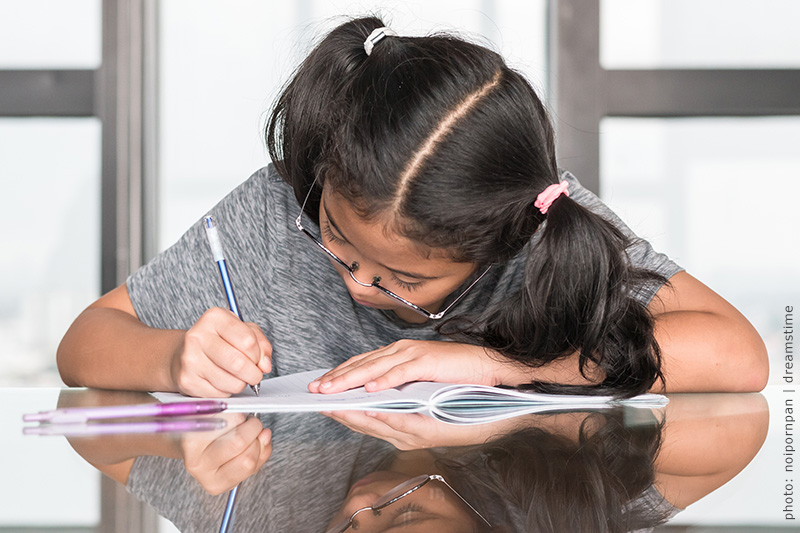
Be Brave with Your Writing
There is so much I’ve learned during my journey as an author. Some of it I picked up along the way and some of it I’m still discovering. If a young person asked me for advice about becoming a writer, here is what I would tell them.
First, read everything you can get your hands on. Not just the books you already love—though yes, read those too — but the ones that seem unusual or from a genre you’d normally skip. Read new books. Read award winners. Read classics. Read whatever’s on the shelf that makes you even a little bit curious.
Every book you read is secretly teaching you how stories work. You might not notice it while it’s happening, but you’re learning. The rhythms, the structures, the way a writer builds tension or earns a moment that makes you cry. Your brain is absorbing it and you’re learning all of it.
Then write. Write whatever you want. Write stories you wish existed. Write a scene that makes you burst out giggling, or a poem about something so embarrassing, you start blushing. Write about missing someone so much your heart physically aches. Write about your best friend, even if it’s your dog (mine is). There’s no wrong genre, no wrong form, no topic too silly or strange.
The only mistake is not writing. Because writing is a skill, and skills grow with practice. The more you practice, the better you get. Athletes train, musicians rehearse, painters paint. If you want to be a writer, write. Every page you write, every sentence you put down on paper or type into your computer — even the bad ones — is growing your skills and improving your craft.
Next share your work for feedback. Take the feedback that resonates and use that to help you revise. Then repeat. Rewrite, share it again perhaps and revise again. Do this until you have a polished, shiny draft you’re happy with. Then do it all over again with another idea. Keep doing it.
If you read a lot, write a lot, learn to get feedback that works for you, and revise a lot, your writing will improve. This will pave your way to becoming published, but there’s more — and this has nothing to do with the act of writing. You will have to be brave. Be brave and face rejection because there’s a ton of it in publishing. Every working author you’ve ever heard of has a stack of rejection letters or emails stashed away somewhere. It doesn’t necessarily mean the work was bad. It might mean it just wasn’t ready yet. Or it probably means art is subjective and the world takes time to catch up sometimes.
But maybe the biggest piece of advice I would give is, be brave with your writing. Don’t write to please everyone. You can’t and trying to will make your work smaller and less interesting and less like you. Instead, write honestly. Write personally. The more real and specific your work is — the more it sounds like you and no one else — the more it will actually move people. When you write from a true place, readers can feel it.
Write from the heart. The stories people remember are the ones that feel real. Write about the things that make you laugh so hard you can’t breathe. Write about the moments that hurt. Write about the people you love, the places you dream of, and the hopes and fears you carry. Your feelings are not weaknesses in writing — they are your greatest strength. The more personal your work is, the more universal it becomes.
I remember working on A Year Without Home and becoming so lost in the story, it was as if I was reliving one of the most difficult moments in my family’s life — being forced to flee our home, the place we cherished beyond words. I wondered, was I sharing too much about my heartache and grief? In the end, I kept my vulnerable emotions in the book and so many readers said to me that while reading, they felt seen. They related to the main character on so many levels. They connected deeply to her sadness.
And you never know the impact your work might have on others. When I first started writing my chapter books, I was excited to be writing a series with Hmong representation. I was glad to write happy stories featuring Hmong kids. I was eager to create characters that felt honest and real. I hoped for but didn’t anticipate I would hear these reactions again and again: your characters have made my kids proud of their background, your books turned my students into readers, and most often, your work is changing lives.
The path to writing can be hard, but don’t give up. If writing books is your dream — if it’s where you feel most like yourself — then you will be a writer. Keep going through the hard stretches. Keep going when it feels slow or impossible. Just. Keep. Going. Write stories only you can tell. Be brave and write what is authentic and true because you just never know. As author-illustrator Debbie Ridpath Ohi says: what you write might change the world.
Particulars
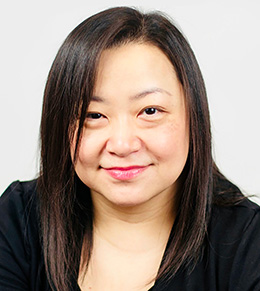
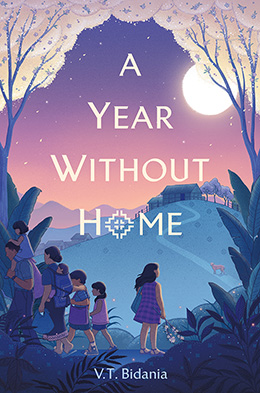
V.T. Bidania is the author of the middle grade verse novel, A Year Without Home, a fictionalized memoir about her family’s escape from Laos after the Vietnam War and their year living in refugee camps before resettling in St. Paul, Minnesota. A Year Without Home was named a Gold Standard Selection by the Junior Library Guild and received starred reviews from School Library Journal, Publishers Weekly, and Booklist. She also writes the Astrid and Apollo and Extraordinary Eliana chapter book series. She has an MFA in creative writing from the New School and is a McKnight Writing Fellow. She lives outside the Twin Cities with her family.